The Black Dinner
At the age of six, the young King James II of Scotland succeeded his father, James I, to the throne of Scotland. His father had been assassinated by conspirators in 1437, facing a gruesome death after being stabbed in a sewer. Whilst the conspirators were ultimately captured and executed, the death of James I saw Scotland plunged into a period of instability with a new boy king at its head.
As with any nation in history with a child for a monarch, various political figureheads with different motives began to emerge. One of the most powerful families in Scotland at the time was the Douglas clan, who had grown in influence over the years. Archibald Douglas, 5th Earl of Douglas, had been given regency over the boy king, and was a prominent military leader. After his death in 1439, another young heir arose - William Douglas, the new 6th Earl of Douglas, only fifteen years old.
This was the perfect opportunity for rival nobles William Crichton and Sir Alexander Livingston, who sought an end to the Douglas clan’s power in Scotland.
In 1440, William and his twelve-year-old brother, David, were invited to Edinburgh Castle, the seat of royal power in Scotland. They were to dine with the king, a prospect that James himself was said to delight in, being only a few years younger than the two Douglas brothers. They travelled to the castle, unaware of the trap that would soon ensnare them.
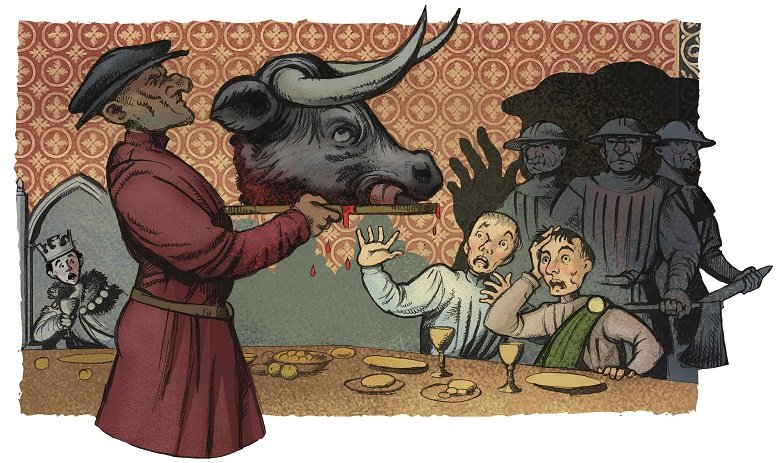
As the two brothers dined with the king in David’s Tower, a black bull’s head was placed on the table. This was an ominous sign, with the bull’s head serving as a symbol of death - signaling their impending demise. Soon after, the young brothers were dragged from the table and taken outside the castle’s walls to Castle Hill. King James pleaded for their lives, but his calls fell on deaf ears. The brothers faced a mock trial and were eventually brutally executed by beheading.
Likely suspects behind the attack were Crichton, Livingston, and James, Earl of Avondale - the great-uncle of the Douglas boys. Also known as James the Gross, he became a likely suspect after his allegiance with the Crichton family.
The dinner serves as a haunting demonstration of the lengths many will go in seeking political power. The instability of the Scottish crown and noble landscape opened a cesspit of blood and betrayal that would be immortalised in history forever as a black stain upon its often dark history. The tale served as inspiration for the Red Wedding in George R.R. Martin’s A Song of Ice and Fire, and lives on today as one of the darkest moments in Scotland’s long history.
Check out my Instagram content on The Black Dinner on @bloggingscotland !
