Saint Andrew
Saint Andrew is the patron saint of Scotland, and is celebrated on the 30th of November every year throughout the nation. Despite these celebrations, many do not know the mythology behind the patron saint, which dates back centuries to the time of Jesus and his 12 apostles.
Andrew was born into a Jewish family in AD 5 in Galilee, then a part of the Roman Empire. He was initially a disciple of John the Baptist. He and his brother, Simon Peter, were fishermen as their trade. It was this practice that would determine their fate, as Jesus would walk past the brothers one day as they worked along the shore of the Sea of Galilee. As he observed them, he called upon them to follow him as his disciples and become “fishers of men”. The two immediately went with Jesus, and became the first disciples of Christ.
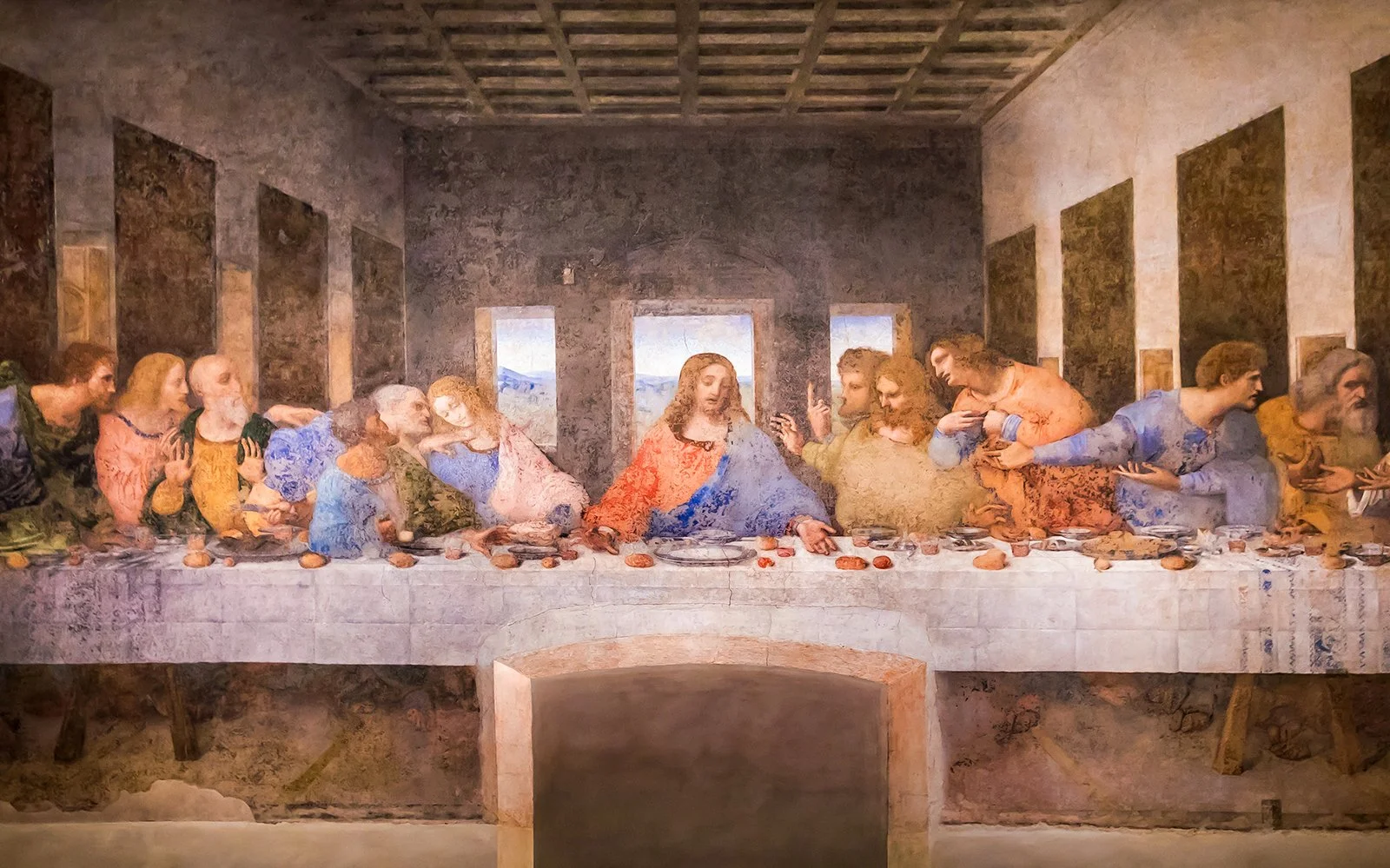
Andrew would go on to display his devotion to Christ for the rest of his life by preaching in various parts of the known world, including Scythia and the Greek colonies, Crimea, Kievan Rus, Slovenia, Rome, Thrace, and Asia Minor. He was also present for many occasions in Jesus’s lifetime, including the Last Supper and the Resurrection.
He would meet his end in Patras, Achaea, in AD 60 by crucifixion. His success in converting many to Christianity was a threat to the Roman authorities, who sought to suppress him. Throughout the ages, the iconography of his martyrdom developed to showcase him on an X-shaped cross, called a crux decussata, now known as the saltire or Saint Andrew’s Cross. This was said to be the apostle’s own request, as he deemed himself unworthy of being crucified on the same type of cross as Jesus.
Following this, Andrew’s relics were buried in Patras, before being moved to Constantinople in AD 357. By the time of the Fourth Crusade in 1204, many of his remains were taken to Western Europe, with some going to Amalfi, Italy, where they are still protected today.
It is believed that some of the relics were also brought from Constantinople to Kilrymont in Scotland, later renamed St Andrews. This brought many pilgrims to the site, until the shrine holding the remains was destroyed in the Scottish Reformation.
In 1879, Andrew’s shoulder bone was donated from Amalfi to Scotland, and Pope Paul VI followed by donating more relics in 1969. These can now be found in the National Shrine of St Andrew in St Mary’s Cathedral, Edinburgh.
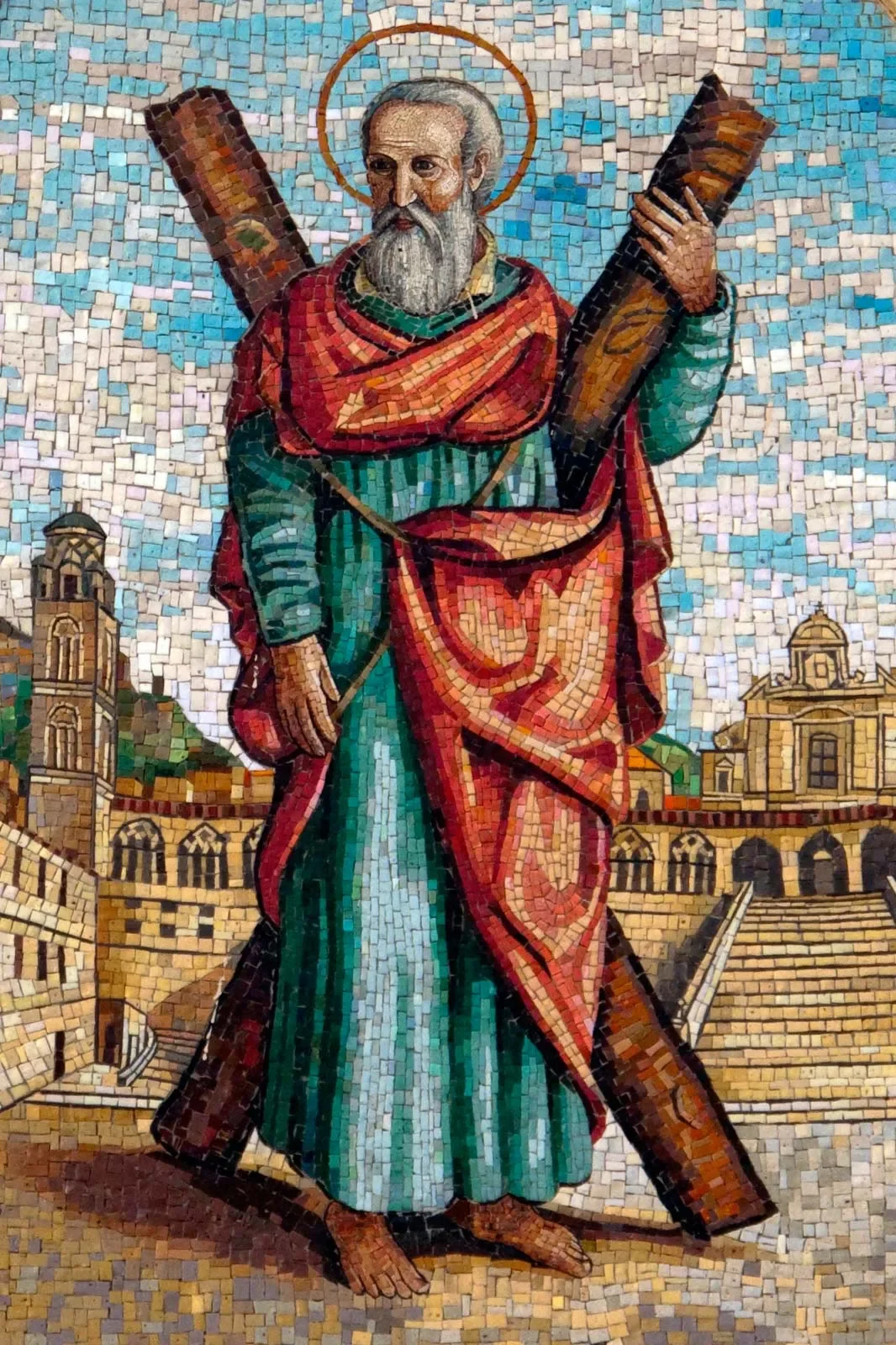
Andrew’s strong link with Scotland comes not through proximity (despite his travels, he never reached Scotland), but through later legend. The story goes that in AD 832, the Pictish King Óengus II led an army of Picts and Scots against Aethelstan, the first King of England, in Athelstanford, East Lothian. The Pictish king was outnumbered and needed a great miracle to see victory, so he prayed on the eve of the battle that if he emerged victorious, he would appoint Andrew as the patron saint of Scotland. The next morning, the white clouds in the sky formed an X-shaped cross, which emboldened the troops. They went on to win the battle, and Óengus honoured his pledge and made Andrew Scotland’s patron saint.
This legend inspired the blue and white saltire of the Scottish flag, representing the blue sky and white clouds that symbolised the divine intervention to aid the Picts and Scots in their victory.
Andrew is the patron saint in various places outside Scotland’s borders, such as Romania, Cyprus, Ukraine, Malta, Amalfi, Russia, and more. He is celebrated every year on the 30th of November with feasting, and St Andrew’s Day has served as a bank holiday in Scotland since 2007. Celebrations in Scotland usually include traditional food and music, and will be followed by the other winter festivals of Hogmanay and Burns night in the coming months.
