Saint Margaret of Scotland

St Margaret of Scotland holds the singular position as the only royal Scottish saint in history. She remains a celebrated figure, revered and admired by many who flock to her monuments in Edinburgh Castle and Dunfermline Abbey as a sight of their religious pilgrimage. Her story throughout her 47 years, spanning from Hungary, to England, and finally to Scotland, has cemented her legacy as one of the most charitable, pious, and moral figures in medieval Scottish history.
Despite her title, Margaret of Scotland was born in Hungary in 1045 to the English prince, Edward the Exile, and his wife Agatha. Edward had previously been sent to Sweden by Cnut the Great after he defeated Edward’s father, the previous king, Edmund Ironside. Edmund is said to have next travelled with his family to Kievan Rus after escaping the murder plot of Cnut. By 1046, Edward had reached adulthood and travelled to Hungary, where Margaret was born along with her two siblings, Edgar and Cristina. The family remained there after supporting the successful restoration of Andrew I to the Hungarian throne.
Margaret was raised in a very religious environment during her time in Hungary. This grew her profound relationship with Christianity, and love for God. She studied various scriptures and religious works, deepening her dedication to religion. Her fascination and passion for Christianity would remain steadfast throughout her life.
When Margaret was around 12 or 13 years old in 1057, she returned to England with her family. Her father had been recalled by the childless Edward the Confessor as a contender for the English throne. As a member of the old Anglo-Saxon monarchy, Edward the Exile offered an appealing and powerful opposition against the growing powers of the sons of Godwin and William, Duke of Normandy. However, Edward died within a few days of his landing in England, leaving Margaret’s brother, Edgar Ætheling as the next possible successor to the English throne. After Edward the Confessor’s death in 1066, and Harold Godwinson’s defeat at the Battle of Hastings, the young Edgar was proclaimed king. However, William the Conqueror’s advancement into England saw Edgar ultimately submit to him at Berkhamsted. He was taken to Normandy, before making a return to England in 1068. The family soon fled to Northumbria to escape the new king.
Margaret’s mother, Agatha, had planned to return to the continent. However, legend has it that their ship was re-routed due to a fierce storm, which drove them to Scotland. The family landed in Fife, and the landing place is known today as St Margaret’s Hope.
Scotland was ruled by King Malcolm III. Malcolm was already acquainted with the House of Wessex, having spent much of his life in England at the court of Edward the Confessor after the death of his father, Duncan, at the hands of Macbeth. His time in the English court supposedly led to an unfulfilled engagement between himself and Margaret. By the time of Margaret’s arrival in Scotland, Malcolm was willing to welcome English exiles fleeing William the Conqueror into Scotland after the Harrying of the North.
It has been suggested that Margaret sought a religious life rather than a royal one, because of her unwavering devotion to God. Due to this, she is said to have initially rejected Malcolm’s proposals of marriage. However, by 1070, she had married Malcolm in Dunfermline. She is said to have had a very civilising influence on her husband, often reading passages from the Bible to him. With Margaret’s piety having a notable effect on Malcolm, he allowed her to pursue her religious interests and reforms throughout their time together. Their happy and fruitful 23-year marriage resulted in eight children: Edward, Edmund, Ethelred, Edgar, Alexander, Edith, Mary, and David. Three of her sons - Edgar, Alexander, and David - went on to become Kings of Scotland. Edmund co-ruled with his uncle, Donald III, from 1094-1097. Her eldest daughter, Edith (later renamed as Matilda), married Henry I of England.
Margaret was a loving but often strict mother, especially in the case of religious studies, where she instilled the virtues of morality and piety in her children. She sent her two daughters to Romsey Abbey in England to receive a religious education, where they were taught English, French, and Latin, so they could read the Bible.
Margaret was also an incredibly philanthropic leader for a woman of her time. She was a vital figure in the transformation of the Church of Scotland, as she sought to bring it closer to Roman Catholicism. She oversaw the adoption of Latin for mass, which replaced the native Gaelic. She believed this would unify the Scots under one singular language and religion, compared to the previous system of mass which was held under various dialects. She promoted Easter communion and abstinence from servile work on Sundays for the working-class people of Scotland. One of her most famous achievements was the establishment of the Queensferry ferry service. This was implemented to aid pilgrims who wished to travel to St Andrews from the southern side of the Firth of Forth. Margaret also established a small priory in Dunfermline, which her son, David I, would later build upon and transform into Dunfermline Abbey in 1128. He would also build and dedicate St Margaret’s Chapel in Edinburgh Castle to his mother in 1130.
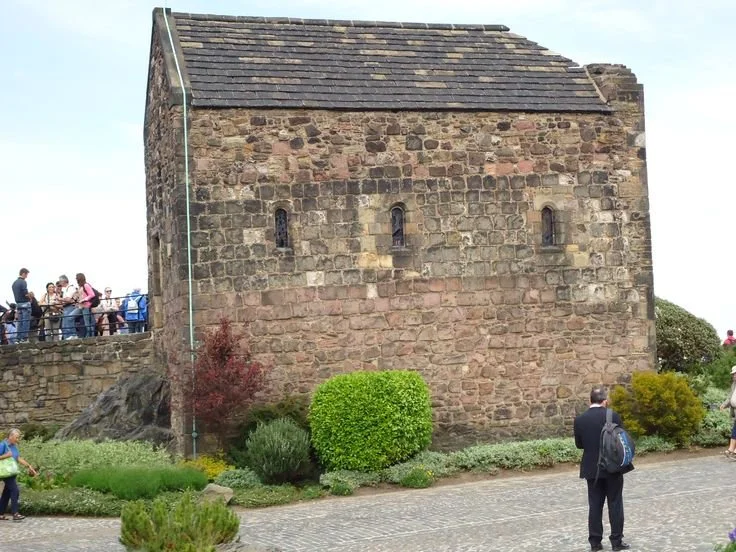
She exercised her power to merge her piety with charity in an effort to aid the people of Scotland. She cared deeply for orphans and the poor, often feeding them and washing their feet as Christ did. This piety, however, contributed to a deterioration of her health due to fastings and abstinence. By the year of 1093, she lay in bed incredibly ill, and was told the grave news that would ultimately see her end. Her husband and eldest son, Edward, were killed in the Battle of Alnwick in Northumbria. Margaret died shortly after this from grief, aged 47. She was buried alongside Malcolm in Dunfermline Abbey.
Margaret was officially canonised as a saint by Pope Innocent IV in 1250 due to her unwavering piety and charitable works throughout her lifetime. Her remains were then reinterred in a shrine within Dunfermline Abbey. However, during the Scottish Reformation, the abbey was sacked and Margaret’s remains were scattered and lost. Mary, Queen of Scots owned her skull at one point, before it was passed on to Jesuits in France, where it was finally lost in the French Revolution.
Margaret’s legacy remains strong today. She is renowned for her various influences - upon her family, her cultural practices, and her religious reforms. Amongst the list of Scottish patron saints, she stands out not only as the only royal, but for her outstanding compassion, gentleness, and enlightened leadership.
Check out my Instagram content on Saint Margaret in Dunfermline Abbey on @bloggingscotland !
