Blackness Castle
Location: Blackness, Linlithgow, EH49 7NH
Status: Open to the public through Historic Environment Scotland

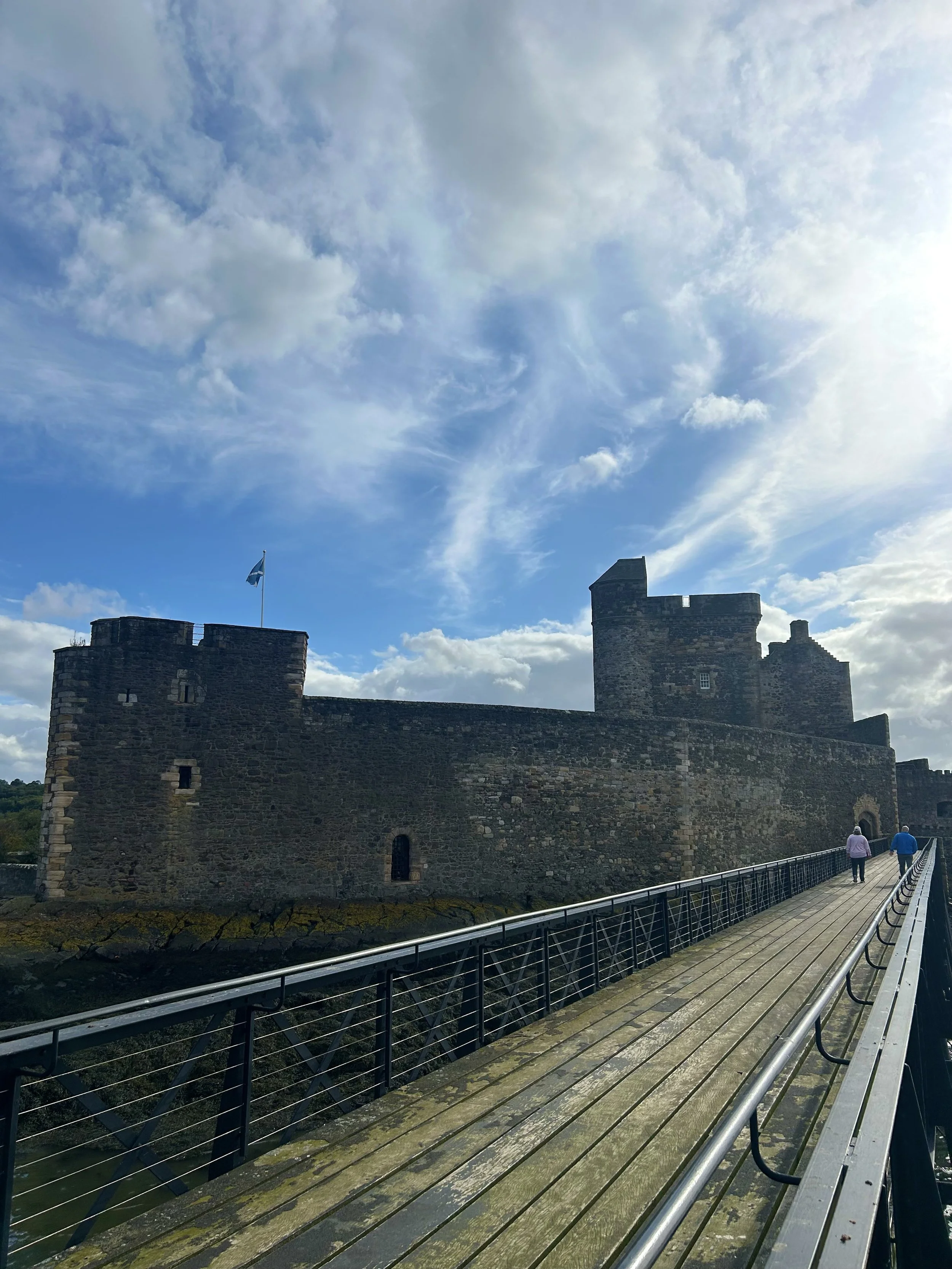

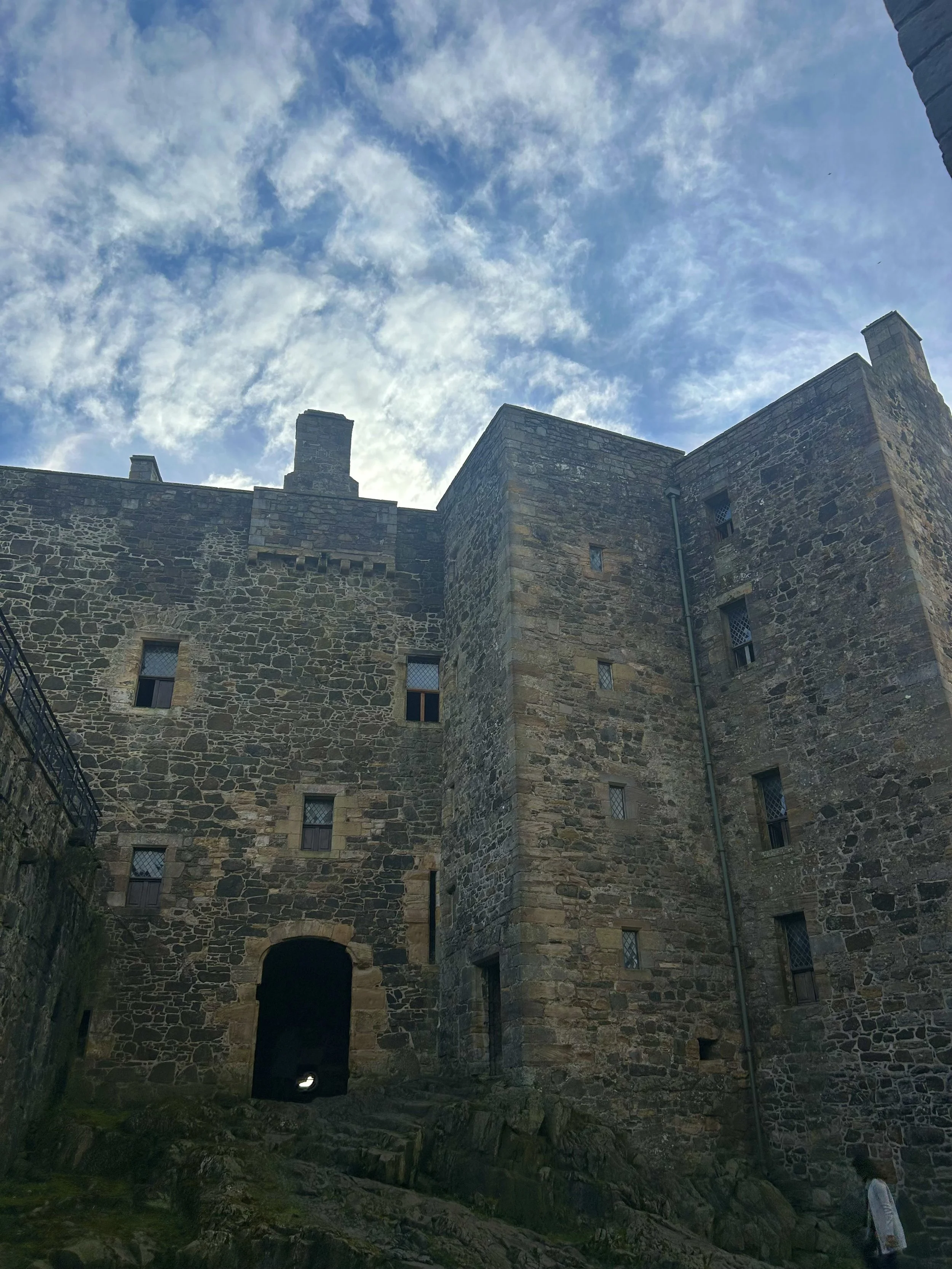
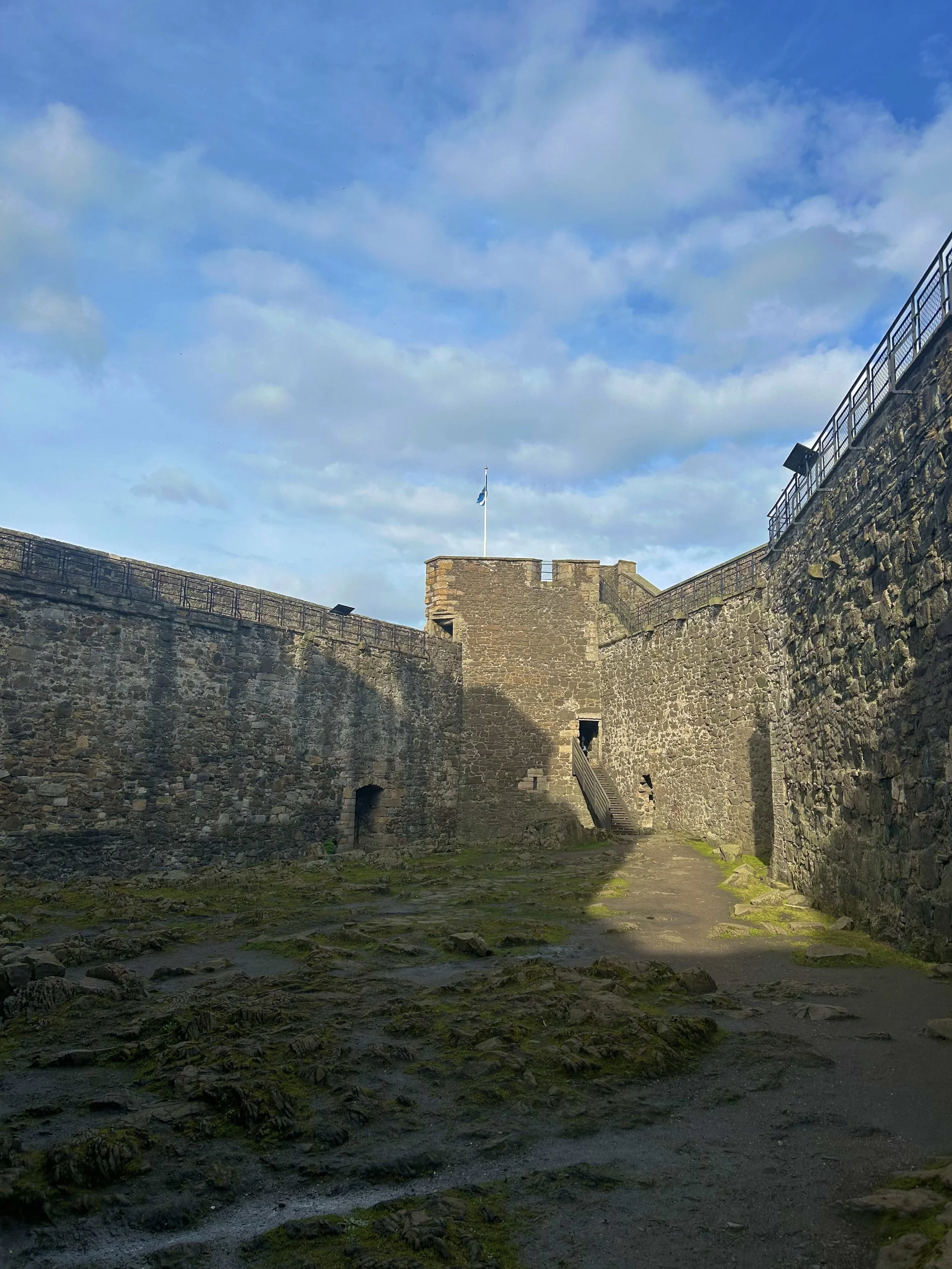
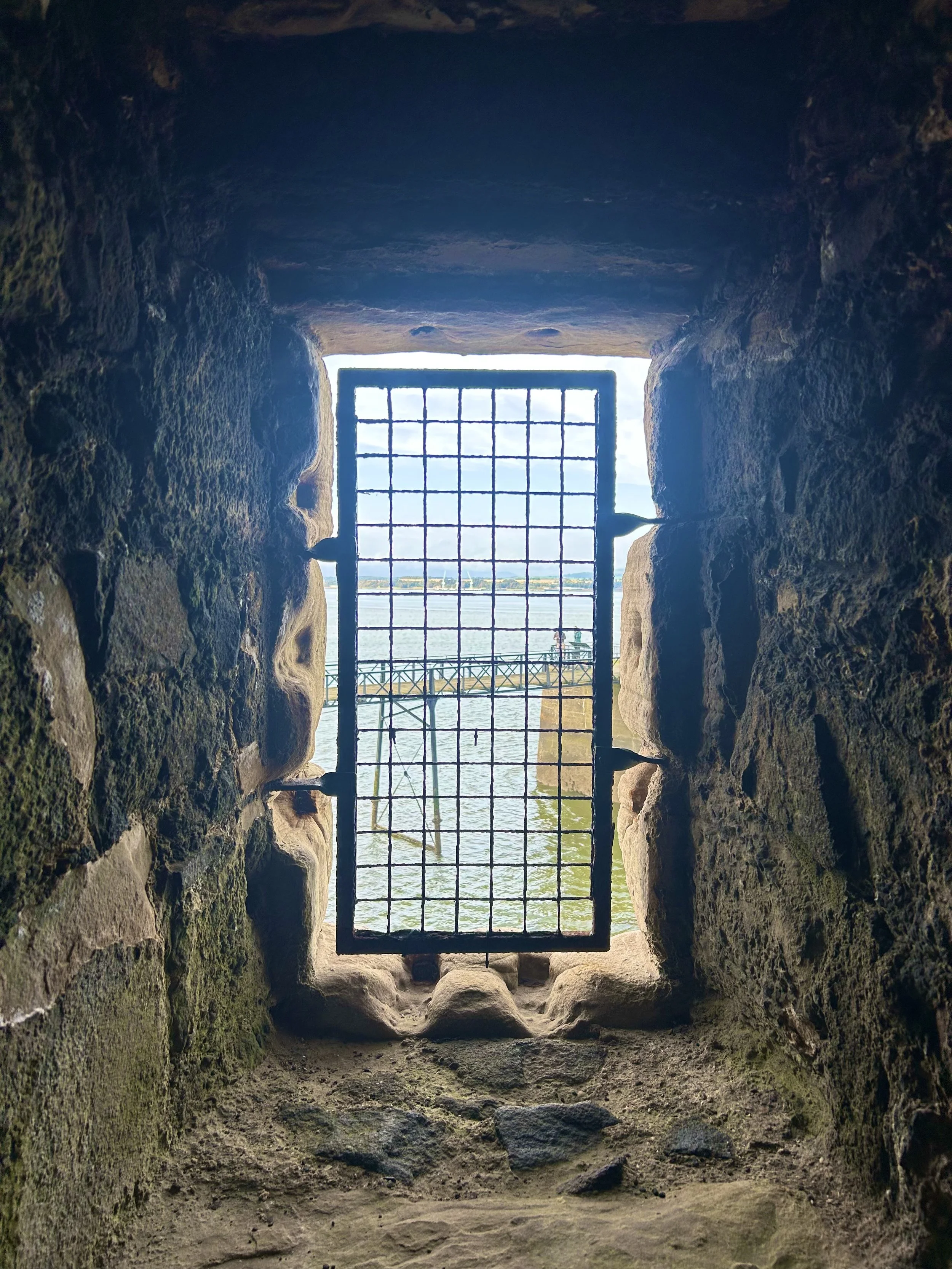
Blackness Castle dates back to the 15th century, built by Sir George Crichton in the 1440s. Its narrow, ship shaped structure has earned it the nickname “the ship that never sailed”. It served as an important state prison over the years, as well as the major port of Linlithgow. It held a strategic advantage through its position jutting into the southern side of the Firth of Forth, making it an important defence against naval attacks, and a valuable way to monitor trade and military movements. It also served as a supply base for Linlithgow Palace only a few miles south-west.
The castle was built in 1449 by Sir George Crichton, later known as the Earl of Caithness. One of the most influential families in the Scottish political landscape, the fortress was designed to showcase their power as much as defend its shores. However, the Crichtons’ hold over the castle did not last long. In 1453, the dispossessed heir, James Crichton, captured the castle and held it off against King James II, whom his father had handed the Crichton lands over to. James II ultimately recaptured it, and George Crichton was released. Blackness Castle thereafter became a royal stronghold, and continued its role as a state prison.
James IV also visited the castle during his reign. In 1506, he visited the Isle of May and travelled to Blackness shortly after, welcomed in by four shawm players. Six years later, he returned with the Scottish warships of the Great Michael and the Margaret to hold an audience with the French ambassador, Charles de Tocque.
In 1537, the Master of Works to King James V, Sir James Hamilton of Finnart, was sent to the castle to design new defences against artillery. Despite his execution for alleged treason in 1540, work continued, largely adding to the castle a caponier and a thickened curtain wall to the south and east, which were previously more vulnerable to cannon. He also added the crowning vault to the Prison Tower for cannon, as well as the three-storey south tower at the landward end of the castle.
Following the abdication of Mary, Queen of Scots in 1567 and the Marian civil war that followed thereafter, the Blackness garrison remained loyal to the Catholic queen. It held out against a blockade until 1573, when Regent Morton laid siege to the castle and caused it to ultimately surrender.
During Oliver Cromwell’s invasion of Scotland in The Anglo-Scottish War of 1650-1652, the castle fell again to a day-long bombardment from land and sea. The defenders surrendered and the castle was abandoned for a time, with lasting scars on its walls that can still be traced today.
By the year 1667, it was restored from its ruinous state to house a garrison. It also took on its previous role as a prison, holding many Covenanters. A bakehouse was added to the basement and a stair tower was added to the south tower. More changes came in 1693 with a wall-walk on the spur, and three gun platforms on the north tower. The Act of Union in 1707 saw the castle cease to be a prison, and instead turn into a fortress garrisoned by the British Army. However, it did return to its prison role to hold French prisoners of war between the 18th and 19th centuries.
In more recent times, the castle became the central ammunition depot for Scotland from 1870-1912. It was used briefly by the British Army during World War I. From 1926-1935, restoration works began, and many of the medieval features of the castle were rebuilt. It is now in the care of Historic Environment Scotland and is open to the public as a historic monument. Several filming productions have used the location over the years, including Hamlet (1990), Outlander, and Josie Rourke’s Mary, Queen of Scots.
Check out my Instagram content on Blackness Castle from my account, @bloggingscotland !
https://www.instagram.com/reel/DRvEn4iDOb0/
https://www.instagram.com/p/DR90QP2jBya/
References
Pettifer, Adrian. Scottish Castles. The Boydell Press, 2024.
