The Witches of Dirleton
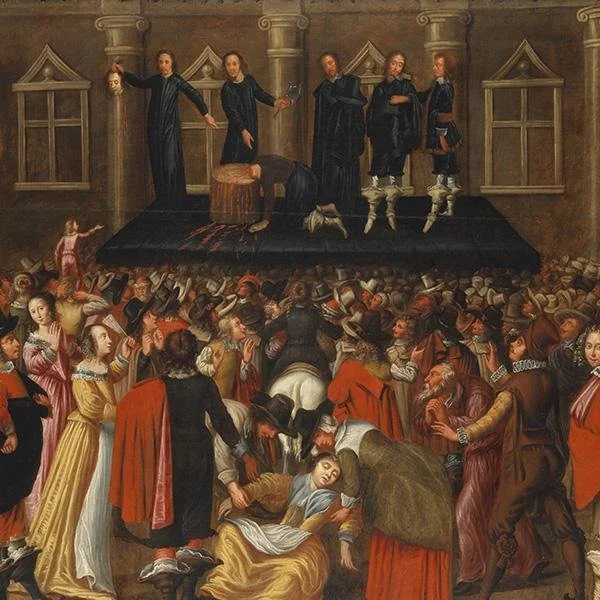
‘Charles I, 1600 - 1649. Reigned 1625 - 1649 (The Execution of Charles I)’ by an unknown artist
From the years 1649-50, Scotland faced a period of major unnest. The wars of the Three Kingdoms had been an ongoing issue for the last decade, plunging the country into political and religious chaos. The unpopular Stuart king, Charles I, had been tried and executed in January of 1649, leading to the rise of the Parliamentarians under Oliver Cromwell. Religious disputes were ever-present not only amongst parliamentary and monarchical forces, but throughout the entirety of the British Isles. This unrest led to a desire for order, which unfortunately manifested into an intense period of witch hunting in Scotland.
From 1649-50, just over 600 accusations of witchcraft were recorded in Scotland, with around half ending in executions. These trials were largely held in the Lowlands of Scotland, mostly in the Lothians, Fife, and the Scottish Borders.
One particular village in East Lothian can still feel the ghost of its victims in the ruined castle that sits within its borders. The beautiful village of Dirleton, a small parish to the west of North Berwick, hosts the ruins of Dirleton Castle within its borders. The castle can trace its history back to the 13th century, and fell into the hands of various families over the years. From the Vaux family, to the Halyburtons, to the Ruthvens, each of its residents made their mark over the years.
The year before Oliver Cromwell’s invasion of Scotland in 1650, which saw the castle ambushed and captured, Dirleton Castle held six particular individuals within its stone walls. They were local residents who had been accused of various accounts of witchcraft. The first was the widow Agnes Clarkson, who in June of 1649, was interrogated by a church court and held in the pit prisons of Dirleton Castle. The interrogation caused her to confess to witchcraft, claiming that she had been visited by a witch from Longniddry who had previously been burned for witchcraft, who then
“did use fearefull curses and execrations, intysing the said Agnes to become the devill’s servant.”
After this encounter, Agnes also claimed that the devil himself appeared and had “carnall copulation with her”, after which she became the devil’s servant. After these interactions, Agnes claimed that a few days later, she attended “a meeting of the devil and sundrie others with him upon the green of Diriltoun”. She named the others that were present at this meeting as Patrick Watson, his wife Manie Halieburton, and Bessie Hogge. These accusations gave way for the witch trials to begin in Dirleton.
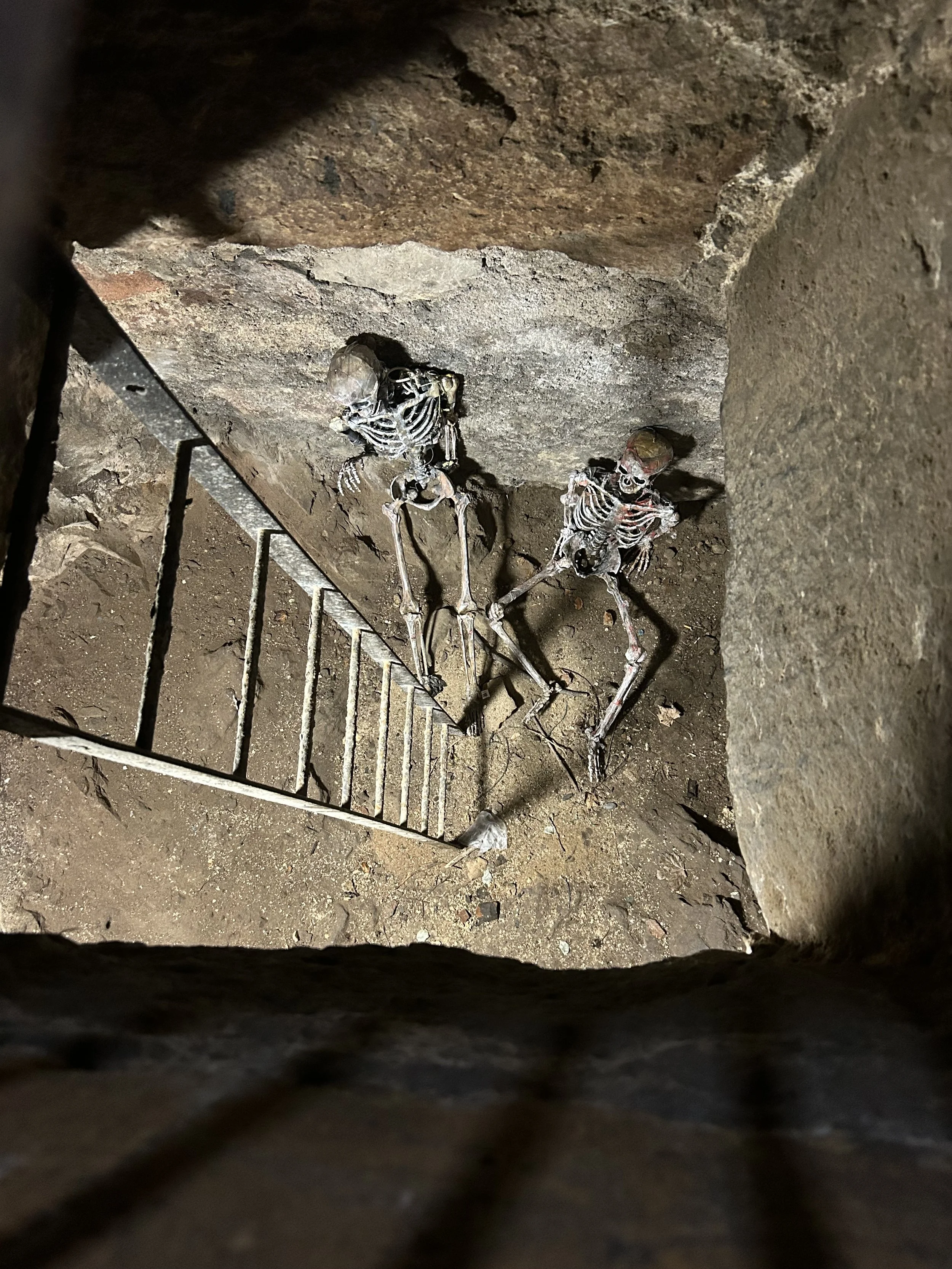
The pit prisons of Dirleton Castle
Manie Halieburton had not only been accused of witchcraft by Agnes, but also by her husband, Patrick. Manie ultimately confessed, claiming she was tricked by the devil. She had also “had carnall copulatioun” with him, after he tricked her by appearing as a physician to help her sick daughter.
Patrick’s accusation did not save him from the same fate as his wife. The two were both examined by the ‘witch pricker’ from Tranent, John Kincaid, who searched for parts of their body that were not subject to pain, or other marks that could be from the devil. Kincaid claimed he found the devil’s mark under Patrick’s left shoulder, and Manie’s just above her left shoulder.
John Kincaid’s career as a pricker eventually came to an end after he was found guilty of fraud and deceit. Pricking was often more of a torture device than a real method of confession, and prickers like Kincaid would usually prick the accused until they forced a confession out of them. In this case, it led to the confession and guilty verdict of the Halieburtons.
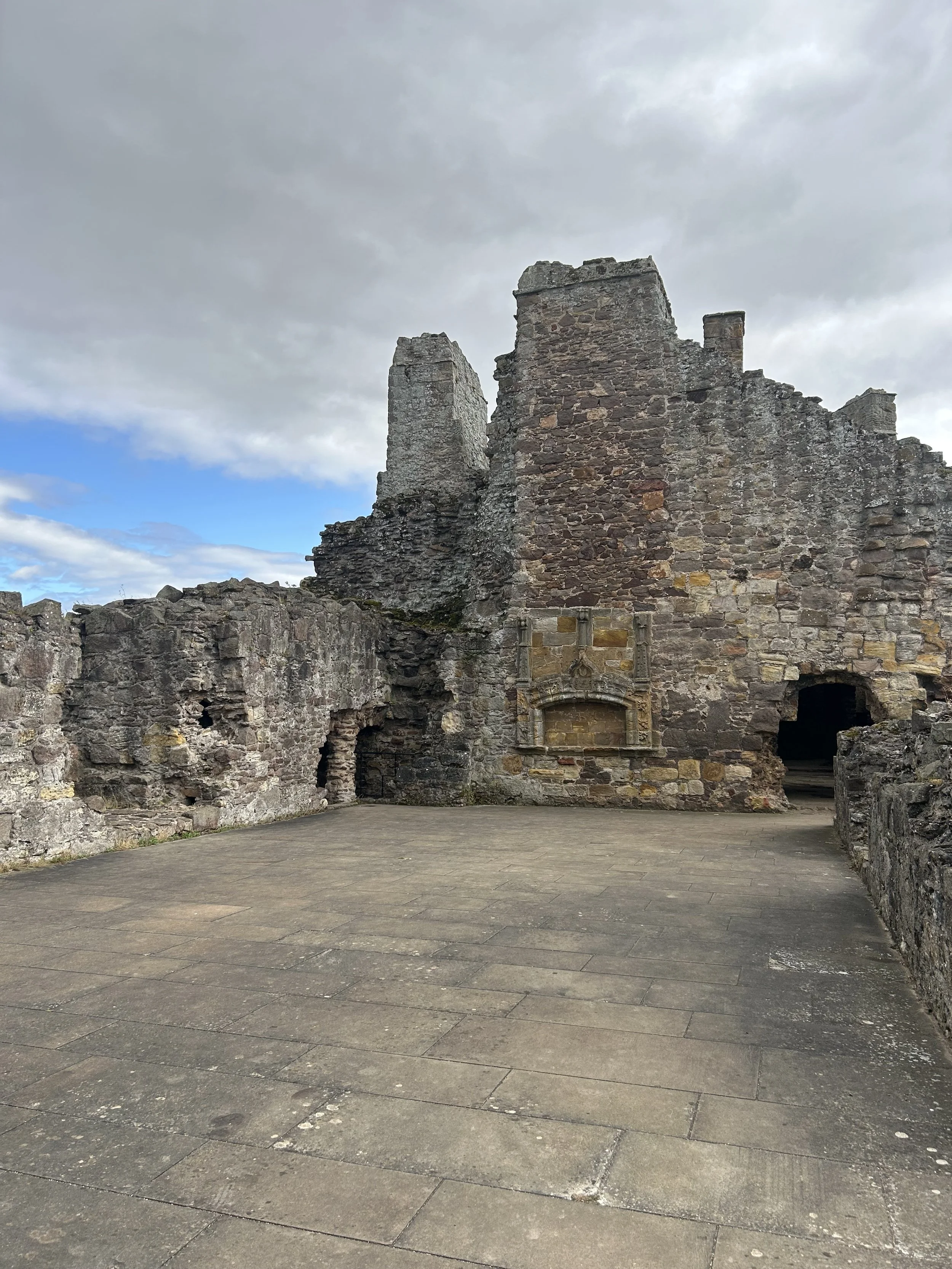
The Great Hall - where John Kincaid examined the Halieburtons
Three other women were accused of witchcraft in the same year within Dirleton, though less is known of their trials. Marione Meik and Margaret Goodfellow were two, and Bessie Hogge, who was seen to have danced with the devil. Whilst no evidence of their trials and confessions has survived, most confessions of witchcraft led to guilty verdicts in trials. So it is mostly likely that Agnes, Manie, Patrick, Marione, Margaret, and Bessie, were all executed as witches.
The witch trials stand as a dark blot in the long history of Scotland, with the county of East Lothian being particularly culpable in the murder of its citizens. In 2022, Nicola Sturgeon, as the First Minister of Scotland at the time, issued a government apology for the brutal murder of all those accused of witchcraft in the past.
The trials of these six individuals stand as one of the darkest days in Dirleton’s history. When visiting the castle, whether you viewing the pit prisons the individuals were held in, or the Great Hall in which they were investigated, it is hard to shake the eerie and uncomfortable knowledge that six innocent people were murdered within the ruined walls of such a beautiful medieval castle.
Works cited
French, Morvern. The Dirleton Witch Hunts. Historic Environment Scotland, 27 March 2020. Available at: https://blog.historicenvironment.scot/2020/03/dirleton-witch-hunts/
