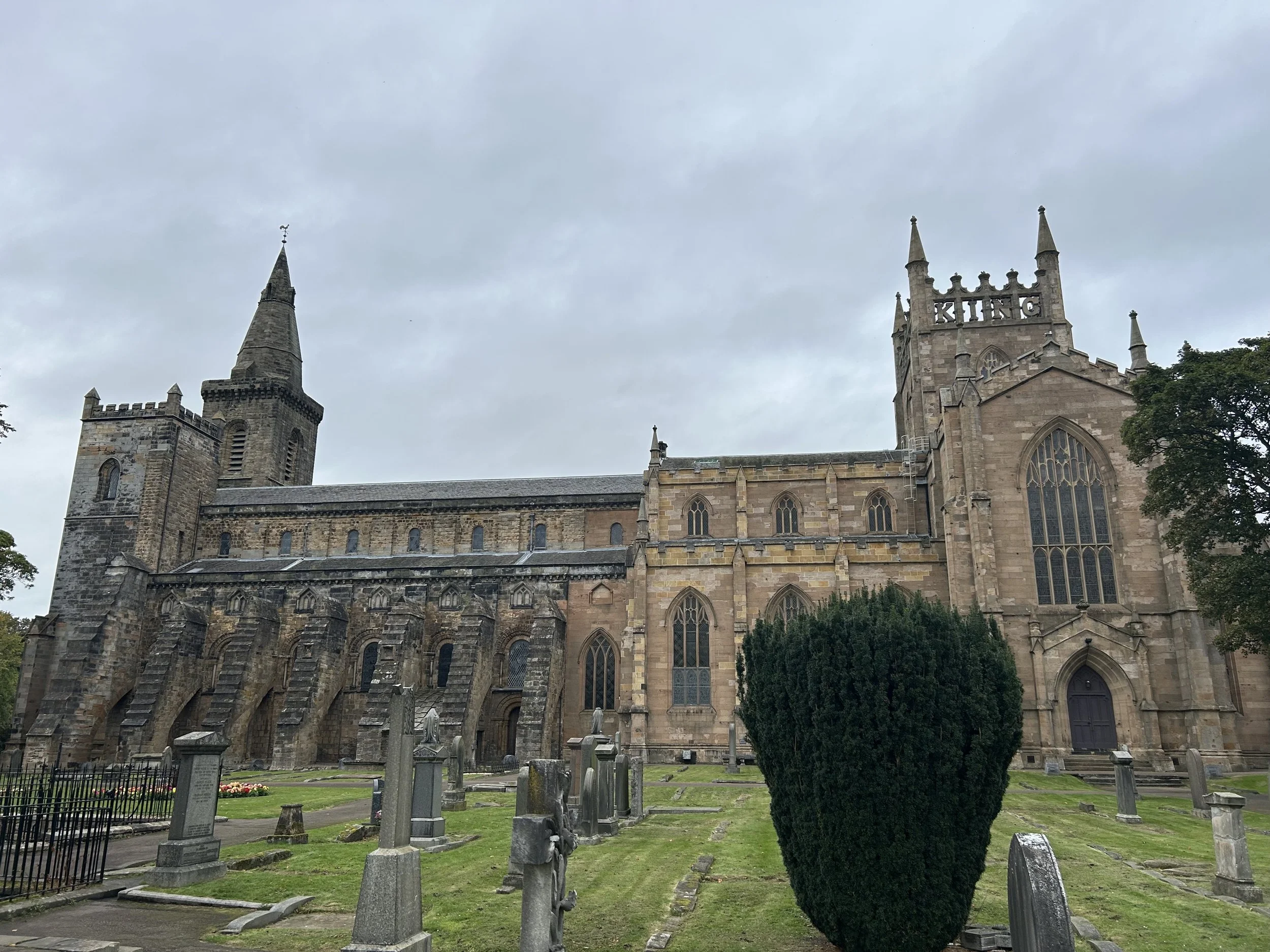
Many of Scotland’s great kings and queens share their final resting place within Dunfermline Abbey. This dates back to the rule of King Malcolm III and Queen Margaret, the latter of which began a small priory that would later be transformed into Dunfermline Abbey by their son, David I. All three rulers were buried within its walls.
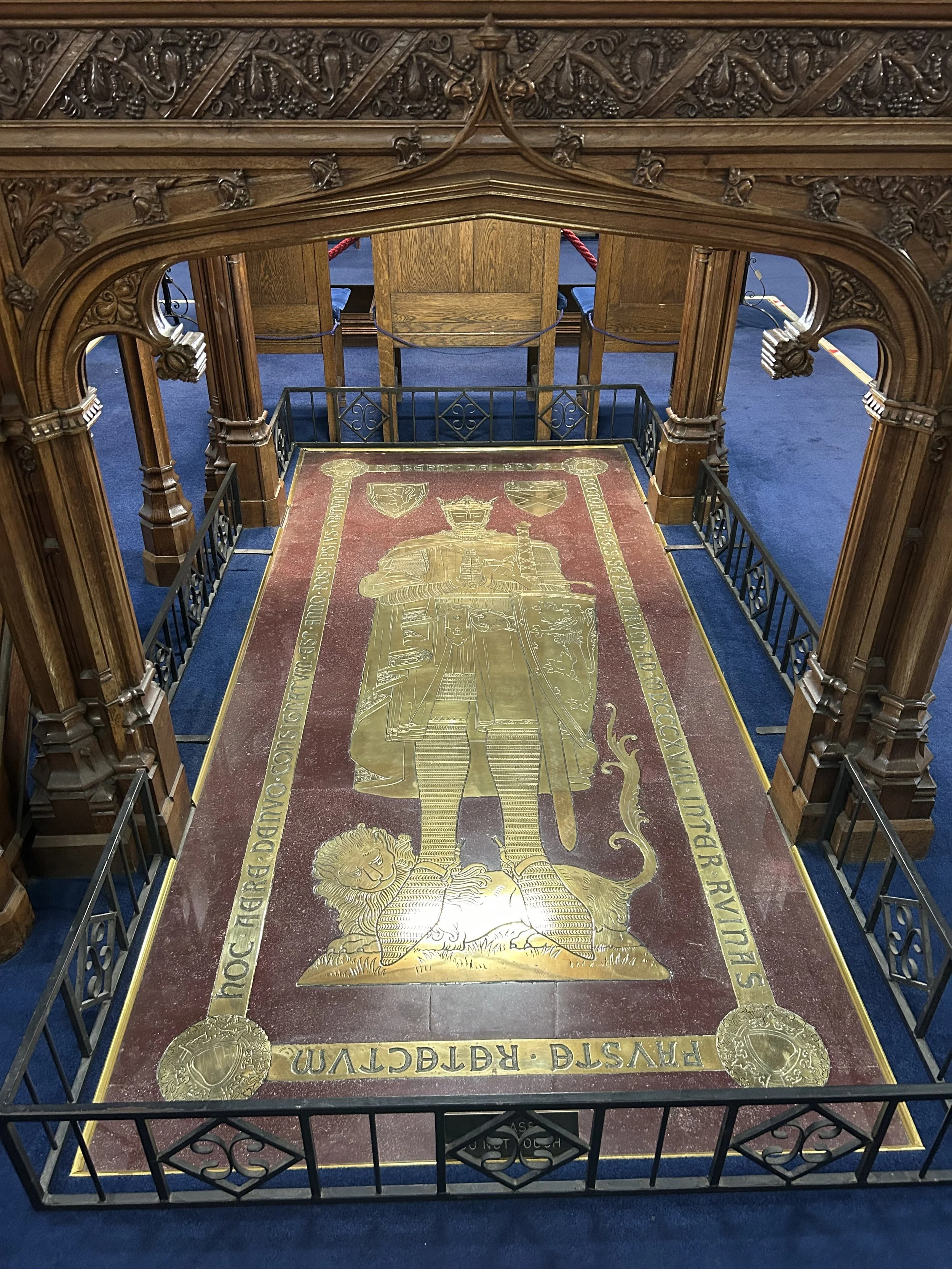
Being such an important site, it was only right that a few centuries later, Scotland’s greatest warrior king, Robert the Bruce, was buried in the abbey as well. On the 7th of June, 1329, after possibly suffering from leprosy or a stroke, the Bruce died at the Manor of Cardross, aged 54. At his personal request, his body was taken from the manor to Dunfermline, to be laid to rest among Scotland’s greats.
Before the burial however, Bruce had one more request. His heart was to be carved out and given to one of his most loyal knights, Sir James Douglas - also known as “The Black Douglas”. It was to be taken on a great adventure, following Douglas abroad on a crusade in the Holy Land. When the heart was extracted, it was placed in a silver casket to be worn around Douglas’s neck. This crusade never quite materialised however, as James Douglas travelled to Spain to aid King Alfonso XI in his fight against the Moorish Emirate of Granada, and fell on the battlefield during the campaign. One myth cites him as crying “Lead on brave heart, I’ll follow thee” during the battle, and throwing the casket ahead of him onto the field. The survivors recovered both the body of Douglas and the heart of Bruce, and returned them to Scotland. The heart was then buried at Melrose Abbey.
Bruce’s bones and heart both faced reburials centuries later. As with many other Catholic buildings throughout Scotland, Dunfermline and Melrose Abbey were destroyed during the Reformation. Henry VIII torched Melrose Abbey in 1544, and Dunfermline Abbey was sacked in 1560. With both buildings in disrepair, the remains were lost over time.
In 1818, during renovations to clear the ruins in Dunfermline Abbey, some construction workers came upon two large slabs buried within the site. Underneath lay a shallow grave, holding inside a skeleton with a sawn sternum. This feature helped to confirm the remains as that of Bruce’s. The skeleton was then reinterred within the newly built Abbey Church, where with much celebration, Bruce was finally laid to rest for all to see.
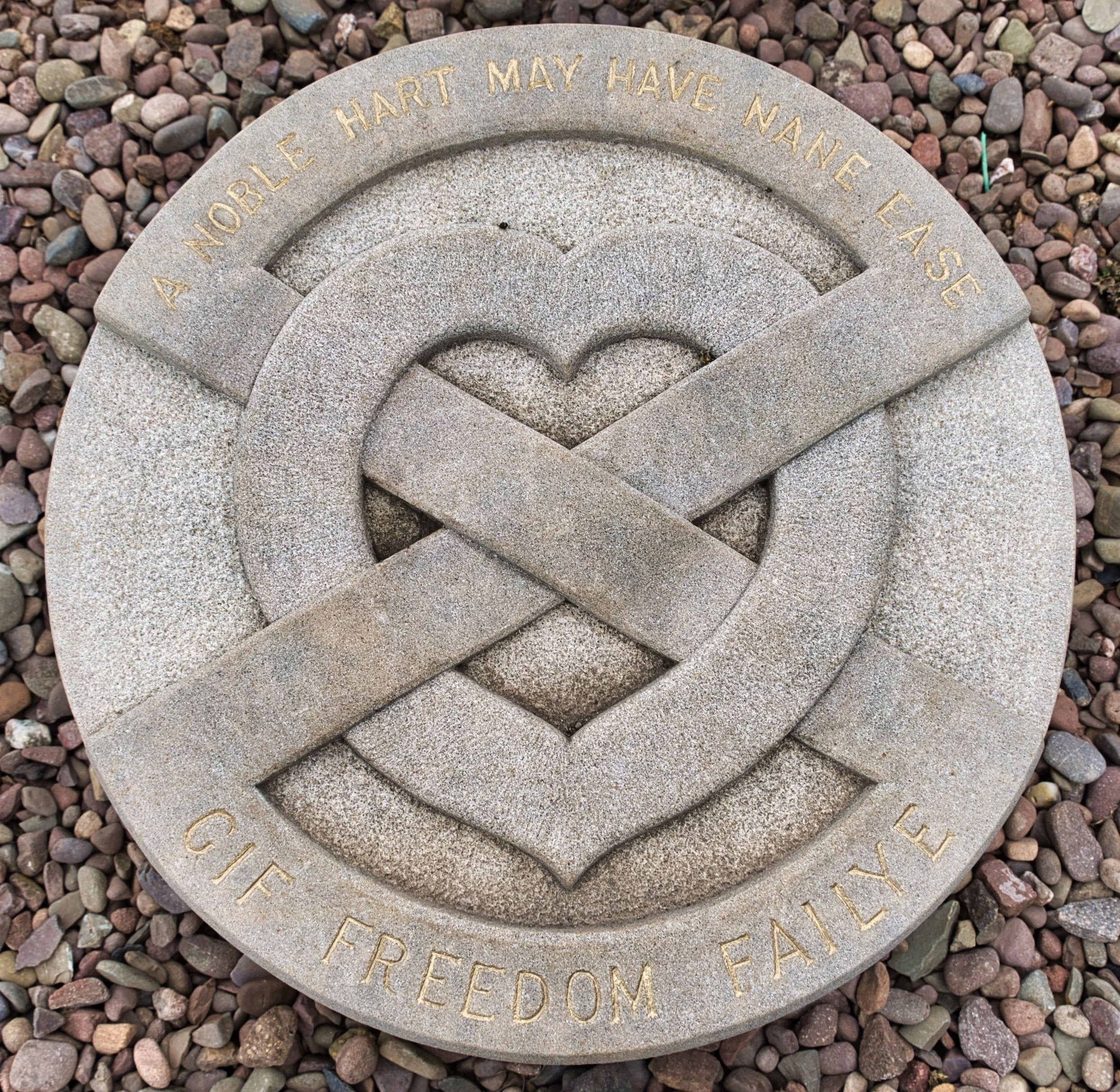
As to his heart, it was discovered in 1920, and then further buried without a marker to identify it. It was only in 1996 that archeologists unearthed the object again, leading to it finally being interred within the Abbey. It can now be found resting underneath a circular marker, memorialising him with the words of the poet, John Barbour - ‘A noble hart may have nane ease / Gif freedom faiyle’.
After centuries of lost tombs and confused locations, Robert the Bruce now finally rests exactly as he wanted - his bones surrounded by Scotland’s monarchs of old in Dunfermline Abbey, and his heart peacefully set within Melrose Abbey.