Why is There a Robert Burns Statue in London?
It is a truth universally acknowledged that London is absolutely filled to the brim with statues. Take a walk in a park square and it has a statue in the corner, roads have statues smack bang in the middle of them, buildings line them atop their roofs. There’s even a new Banksy statue poignantly placed by Pall Mall alongside other historical and cultural monuments.
On my recent trip to London, one of my many boxes to tick was the Victoria Embankment Gardens by the Thames. Other than being a delightful little gem of a walk beside the greyness of the Thames, I was seeking out a statue of particular significance. Amongst the many stone lords, generals and soldiers, Scotland’s national bard, Robert Burns, sits proudly amongst the greenery. He looks eloquent and thoughtful, pondering as his robes cascade from over his shoulder. Below him, his own words are inscribed:
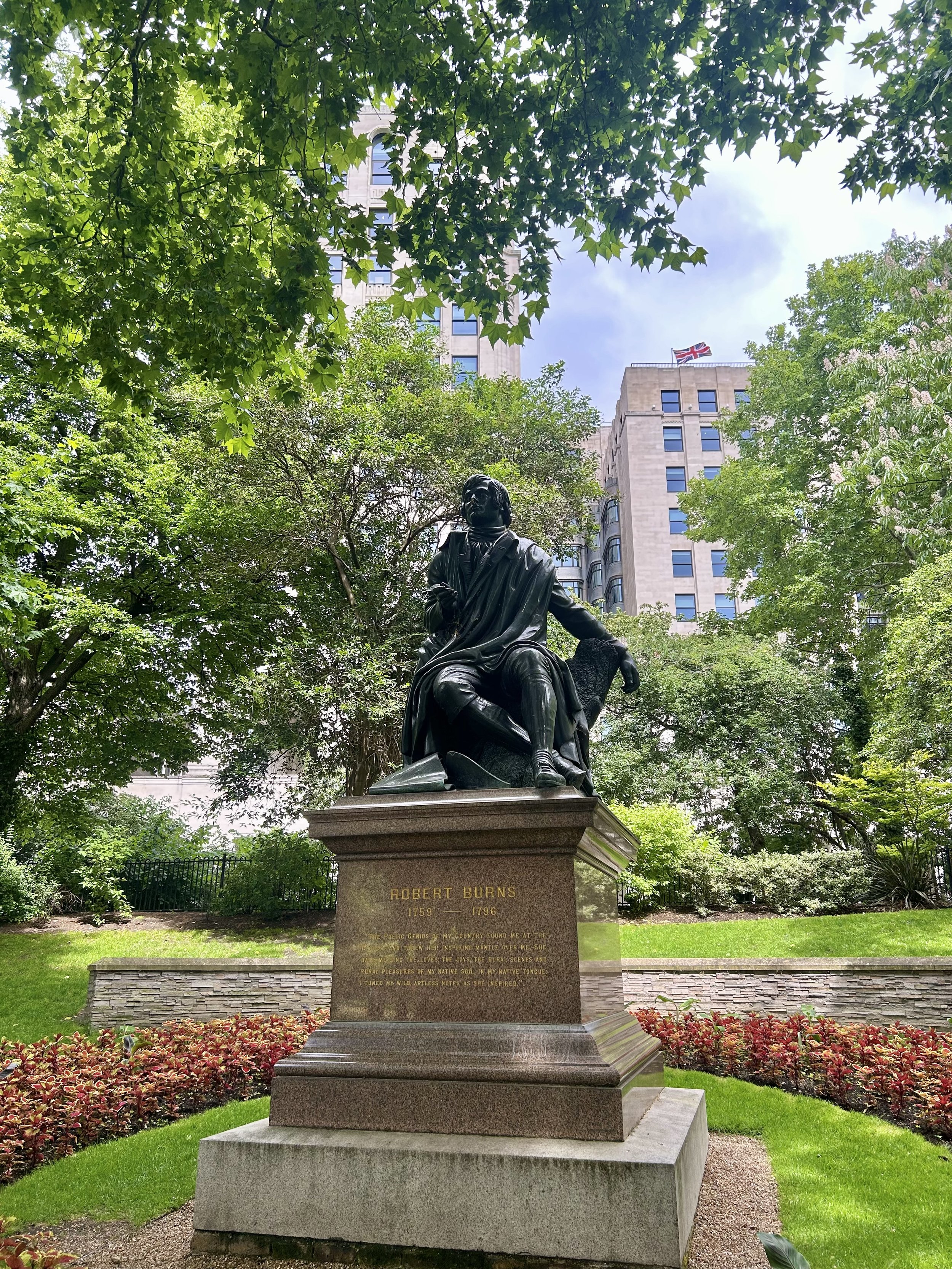
The poetic genius of my country found me at the plough – and threw her inspiring mantle over me. She bade me sing the loves, the joys, the rural scenes and rural pleasures of my native soil in my native tongue: I tuned my wild, artless notes as she inspired.
Now why would London have a statue of Robert Burns? Considering Burns never actually stepped foot in the city, it makes little sense to have a statue of Scotland’s national bard, a farmer from over 400 miles away in rural Ayrshire, in the city of Empire.
The answer is fairly simple – Victorian admiration.
The statue went up in 1884 after receiving funding from Scots in London who wished to celebrate the bard. Burns was a popular poet in his day, but even a century after his death, his legacy continued on. He sits amongst other monuments to cultural figures because the Victorians recognised the massive impact he had on literature, and appreciated his poetic power.
The Victorians lived through a time of rapid industrial change. Their skies were polluted and their cities were cramped an overcrowded. Everyone was working in factories, with poor working conditions and living in poverty. Burns came from a different time and held a different lifestyle. He was a poor farmer on his land, unaffected by technological advances. His rural lifestyle seemed untouched by the progress of modernity that was plaguing the Victorians. This meant he could serve as a form of escapism, to a ‘better time’.
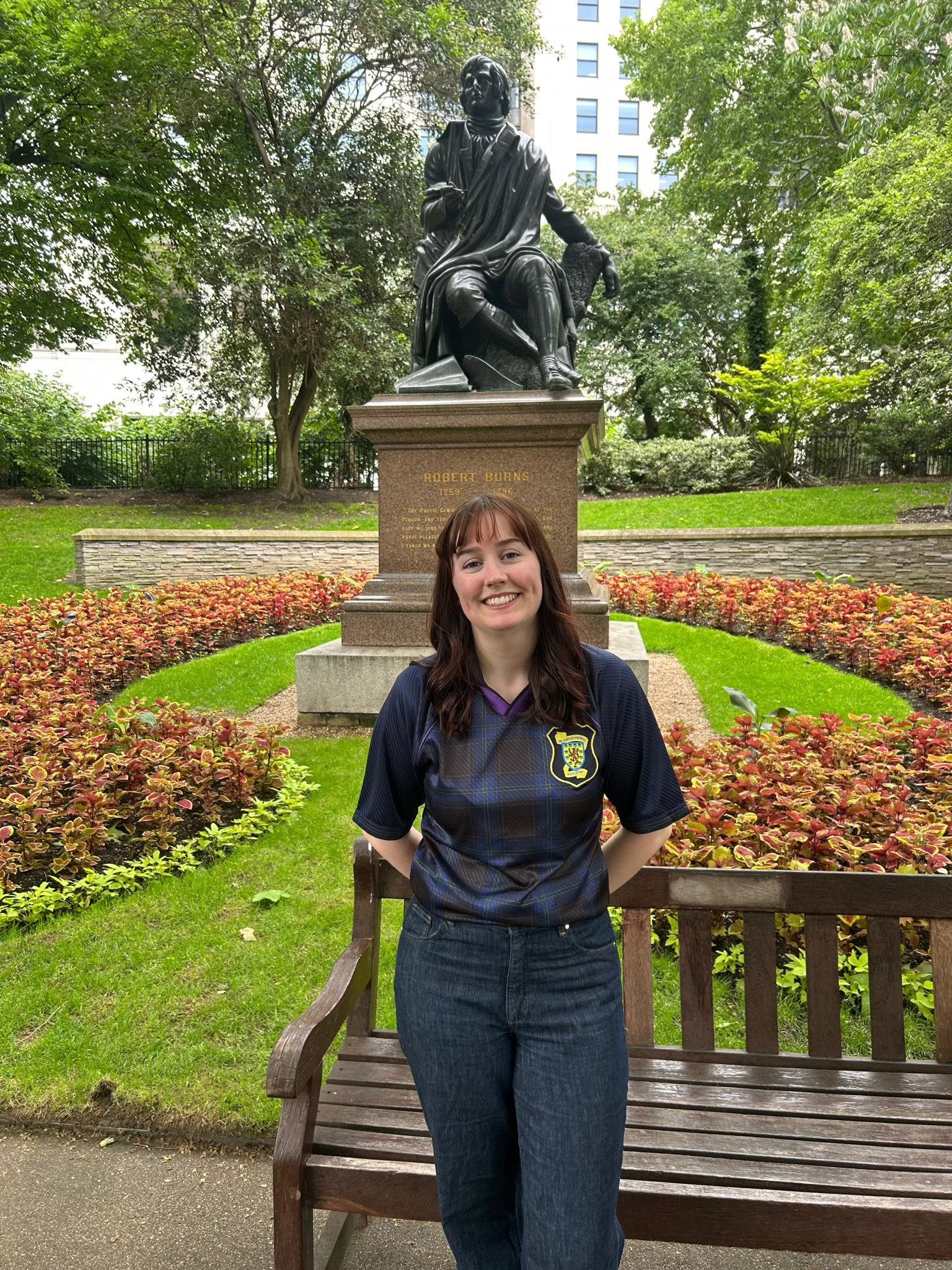
Representing Scotland in London
The Victorians also loved ideas of self-improvement. Burns had managed to work his way up the ranks from poverty to being published across the world due to his talent. But he was also a notoriously flawed man. He was impulsive, a drunk, a womaniser. He was absolutely flawed, and didn’t shy away from this in his poetry. But it was this sincerity that made him so endearing to the Victorians. The way he exposed his own contradictions was what they appreciated, because it was a real show of emotional authenticity.
The Victorians were similar to the Romans, in that they were good at taking things and polishing them into perfection. So they took Burns – this rebellious, complicated, and morally flawed man – and cleaned him up. They started popularising Burns Clubs, they celebrated anniversaries, they put up statues – all to memorialise a slightly more edited version of Robert Burns.
He was turned into the very respectable National Bard of Scotland that we can see in his London statue today. Instead of being a ‘womaniser’, he became ‘passionate’. His ‘drunkenness’ turned into simple ‘human weakness’. This made him more sympathetic. He was still flawed, but greatly admired for his recognisable humanity.
So there he sits, within the beautiful Embankment Gardens, looking rather proud of himself. A humble man who wrote so passionately about Scotland, now fully emerged within the British literary canon. This respectable and noble monument of Burns is well worth a visit if you find yourself nearby the Embankment – and might provoke a wee giggle for those who can recognise the real character of the man carved into the stone.
